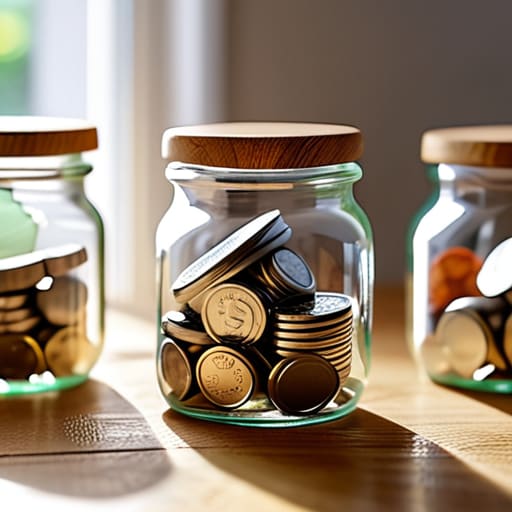
Using Sinking Funds to Make Saving for Everything Easier
I remember sitting on the floor of my childhood apartment, staring at a broken chair leg and a bank balance that was basically zero, wondering why “financial planning” always felt like something reserved for people with trust funds. Most gurus make it sound like you need a complex spreadsheet and a degree in finance just to handle an unexpected car repair or a holiday gift list. They turn it into this massive, daunting project, but honestly, learning how to set up sinking funds shouldn’t feel like a second job. It’s not about restriction or deprivation; it’s about pre-paying for your own life so the inevitable surprises don’t knock the wind out of you.
I’m not here to sell you on a complicated 12-step program or a premium budgeting app that costs more than your groceries. I want to show you how to build a few simple, automated systems that do the heavy lifting in the background while you actually focus on your work and your hobbies. We’re going to look at the low-effort way to categorize your upcoming expenses and get those transfers running. By the end of this, you’ll have a system that keeps your money organized without requiring you to check a spreadsheet every single morning.
Table of Contents
The Emergency Fund vs Sinking Fund Distinction You Need

Before you start moving money around, you need to clear up one massive misconception: an emergency fund is not a sinking fund. I see people treat them as the same thing all the time, and it’s a recipe for stress. An emergency fund is your “oh no, the transmission blew or I lost my job” money. It’s meant to sit there, untouched, acting as a financial shock absorber. A sinking fund, however, is for things you know are coming. It’s for the annual car registration, the inevitable dental cleaning, or even that new synth component you’ve been eyeing.
The core difference in the emergency fund vs sinking fund debate is predictability. One is for chaos; the other is for planned expenses. If you use your emergency fund to pay for a holiday gift or a routine vet visit, you aren’t actually prepared for a real crisis. Instead, you should be looking at monthly savings goals for irregular expenses to bridge that gap. By separating the two, you stop feeling guilty when you spend your sinking fund money, because you know your “safety net” is still fully intact.
Practical Sinking Fund Examples for Beginners to Get Started
Don’t try to account for every single cent you might ever spend; that’s a recipe for burnout. Instead, look at your year and identify the predictable “surprises.” I usually start with the basics: car maintenance, annual subscriptions, and holiday spending. If you know your car insurance is $600 every six months, that’s a $100 monthly obligation. These are your monthly savings goals for irregular expenses. By treating these like a bill rather than a sudden crisis, you stop feeling like you’re constantly playing catch-up with your own bank account.
Once you have the big ones covered, look at your lifestyle. Do you have a hobby that requires gear upgrades, or a pet that needs an annual vet visit? Maybe it’s just a “new clothes” fund for when the seasons shift. When looking for sinking fund examples for beginners, the goal is to target the expenses that currently make you feel guilty or stressed when they hit. Pick three, automate the transfers, and let the system do the heavy lifting while you focus on everything else.
Five ways to actually make this work without it becoming a second job
- Automate the transfers immediately. If you have to manually move money every month, you’re going to forget, or you’re going to convince yourself you need that $50 for takeout instead. Set it to move the day after your paycheck hits so the decision is made before you even see the balance.
- Keep your “buckets” simple. Don’t try to create a separate fund for every single minor inconvenience like a new toothbrush or a pack of lightbulbs. Group small, frequent costs into one “Household Maintenance” fund so you aren’t managing twenty different tiny accounts.
- Use a high-yield savings account (HYSA). There is no point in letting your sinking funds sit in a standard checking account earning zero interest. Put them somewhere they can earn a few extra dollars in interest while they wait for you to use them.
- Audit your categories every six months. Your life changes—maybe you stopped traveling as much or your car started needing more frequent repairs. If a fund is sitting stagnant and bloated, move that excess into your emergency fund or a debt payment.
- Be realistic about the math. If you want a $1,200 holiday fund by December and it’s already July, don’t pretend you can save $200 a month if your budget is already tight. Scale the goal back to something you can actually hit, or you’ll just end up feeling like you failed.
The Goal is Frictionless Living
Look, the whole point of this isn’t to turn you into a professional accountant or to make you spend your Sunday mornings staring at spreadsheets. It’s about the math we covered: separating your “oh shit” emergency fund from your “I actually planned for this” sinking funds. Whether you’re prepping for car maintenance, a holiday gift spree, or that inevitable laptop upgrade, the strategy remains the same. Set up your categories, automate the transfers, and then forget they exist. If you do this right, you aren’t just saving money; you’re removing the mental tax of unexpected expenses that usually derail your month.
At the end of the day, I’m not interested in perfection; I’m interested in systems that actually hold up when life gets messy. You don’t need a massive windfall to start feeling like you’re in control of your surroundings and your bank account. Start small—even if it’s just ten bucks a week into a “new shoes” fund. Those tiny, repeatable wins are what build the foundation for a life that feels stable rather than reactive. Stop letting your future expenses catch you off guard and start building your own safety net, one automated transfer at a time.
Frequently Asked Questions
Do I actually need a separate bank account for every single fund, or is that just more admin work I don't need?
Look, if you try to open fifteen different savings accounts, you’re going to burn out in a month. That’s just more admin for the sake of admin. You don’t need a separate account for every single goal. Instead, use one high-yield savings account and keep a simple spreadsheet or a note in your phone to track the balances. Just make sure the total in the account matches the sum of your individual funds. Keep it simple.
How much should I realistically be putting into these funds every month without feeling like I'm suffocating my current budget?
Look, if you try to fund everything at once, you’re going to burn out by Tuesday. Don’t aim for perfection; aim for momentum. Start by picking just two high-priority categories—maybe car maintenance and holiday gifts—and automate a tiny, almost unnoticeable amount, like $25 each. Once those feel seamless and you aren’t feeling the squeeze, add another category. The goal is to build the system incrementally so it actually sticks.
What happens if I overfund one category but another one is running dry—can I just move the money around?
Yes, you absolutely can. Think of these funds as buckets, not locked vaults. If your “Car Maintenance” bucket is overflowing but your “Holiday Travel” fund is bone dry, just move the cash. The goal isn’t to maintain perfect mathematical symmetry; it’s to ensure you aren’t caught off guard by a bill. Don’t let the pursuit of a “perfect” spreadsheet stop you from using the money for its actual purpose. Just move it and move on.