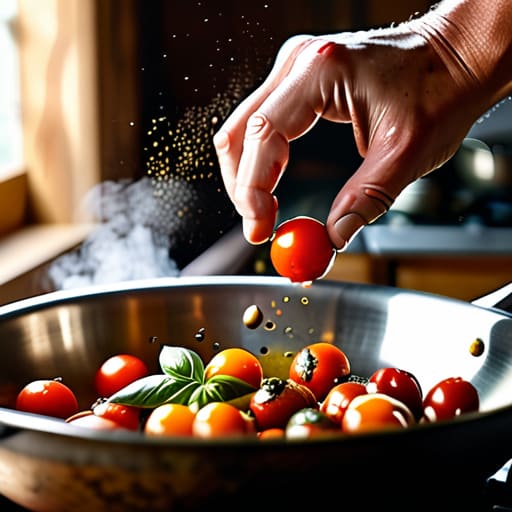
Cooking Without Recipes: How to Wing It Successfully
I used to spend my Sunday nights staring at a screen, scrolling through food blogs that required a three-page backstory about a grandmother’s summer in Tuscany just to tell me how to sauté an onion. It’s exhausting, and honestly, it’s a waste of the little free time we actually have. Most people think you need a culinary degree or a literal stack of cookbooks to make a decent meal, but that’s just more noise. I learned early on, growing up in a house where we had to make a single bag of lentils stretch for three days, that knowing how to cook without a recipe isn’t about being a chef; it’s about understanding ratios and heat.
I’m not here to give you a list of complicated techniques or tell you to buy a set of expensive copper pans. My goal is to teach you a repeatable system—a way to look at whatever random vegetables are wilting in your crisper drawer and turn them into a real meal without the mental tax of a formal instruction manual. We’re going to focus on building a flavor framework that works every single time, so you can spend less time reading and more time actually eating.
Table of Contents
Mastering Pantry Staple Cooking to Save Time
The secret to not staring blankly at your pantry at 7:00 PM is realizing you don’t need a recipe; you need a system. I spent years treating my kitchen like a laboratory where every gram was measured, but that’s a recipe for burnout. Instead, I focused on pantry staple cooking by grouping items into functional categories: your base (grains or pasta), your protein (beans, canned tuna, or eggs), and your “brighteners” (vinegar, citrus, or hot sauce). Once you stop looking for a specific dish and start looking for these components, the mental load of deciding “what’s for dinner” disappears.
The real shift happens when you move from following instructions to understanding cooking ratios. Most great meals are just basic math: a fat, an acid, and a starch. If a dish feels heavy or flat, don’t reach for more salt; reach for something acidic like a splash of apple cider vinegar. This is where your kitchen improvisation skills actually kick in. You aren’t guessing; you’re just balancing the scales. It’s a small, repeatable win that keeps you fed without the decision fatigue.
Understanding Cooking Ratios for Consistent Wins
If you want to stop relying on a printed list of instructions, you have to stop thinking in measurements and start thinking in proportions. Most recipes are just rigid frameworks, but once you start understanding cooking ratios, you realize that cooking is mostly just math you can taste. Whether it’s the ratio of fat to acid in a vinaigrette or the balance of starch to liquid in a risotto, these proportions are the invisible scaffolding that keeps a dish from falling apart. Once you memorize the basic ratios, you aren’t just following a script anymore; you’re actually building a system.
This is where your kitchen improvisation skills really kick in. Instead of panicking because you’re out of heavy cream, you look at your ratios and realize you can substitute a bit of milk and butter to hit that same fat percentage. It’s about maintaining the structural integrity of the dish while using whatever you actually have on hand. When you master these fundamental balances, you stop being a slave to the cookbook and start making decisions based on what the pan is telling you.
Five ways to stop reading and start cooking
- Build a “flavor profile” mental map. Instead of hunting for a specific recipe, decide on a vibe first—Mediterranean, Thai, or Mexican—and pull your spices and acids from that specific direction.
- Use the “Acid Check” when a dish feels flat. If it tastes dull but you’ve already added salt, don’t reach for more sodium; reach for a squeeze of lemon or a splash of vinegar to wake the flavors up.
- Treat vegetables as a texture variable, not a list of ingredients. If you have broccoli and carrots, toss them in the same pan; just time them so the harder ones hit the heat first.
- Master the sear to create depth. Most people cook everything until it’s just “done,” but getting a real crust on your protein or even your mushrooms adds a layer of complexity that makes a cheap meal taste expensive.
- Keep a “go-to” template for emergencies. I always keep a jar of aromatics (garlic, ginger, onion) ready so I can turn a random pile of leftovers into a base for a soup or a stir-fry in under ten minutes.
Stop Overthinking the Menu
At the end of the day, cooking without a recipe isn’t about becoming a Michelin-star chef overnight; it’s about building a system that stops your kitchen from becoming a source of stress. You don’t need a library of cookbooks when you understand how to leverage your pantry and how basic ratios—like acid to fat or grain to liquid—actually work. Once you stop looking for exact measurements and start looking for functional patterns, you stop being a slave to the grocery list and start being someone who can actually handle whatever is left in the fridge at 7:00 PM on a Tuesday.
I spent years thinking I needed the “perfect” ingredients to make a decent meal, but that was just a way to avoid the learning curve. Real confidence in the kitchen comes from the small, messy wins—the time you accidentally made a killer sauce or the night you turned a random can of chickpeas into something that actually tasted good. Don’t wait for a special occasion or a full shopping cart to start practicing. Just grab a pan, trust your senses, and build the habit of cooking for your life, not for an Instagram feed.
Frequently Asked Questions
What are the absolute bare-minimum pantry staples I need to get started so I'm not just staring at an empty cupboard?
Don’t go overboard and buy a spice rack you’ll never use. You just need a foundation. Grab a decent olive oil, kosher salt, black pepper, and a few versatile aromatics like garlic and onions. For the base, keep dried pasta, rice, and a couple of cans of beans or crushed tomatoes on hand. That’s it. If you have those, you can always turn a random vegetable into a real meal.
How do I know if I've actually messed up a dish versus it just being a "new flavor profile"?
It’s a fine line, but here’s my rule of thumb: if it tastes bitter, metallic, or like something actually burned, you messed up. That’s not a “profile,” that’s a mistake. But if it just tastes “weird” or unexpected—like too much acid or a strange spice combo—that’s just an unrefined palate. Don’t toss it. Grab some salt, fat, or heat to balance it out. Most “failures” are just one ingredient away from working.
Is there a way to apply these ratios to different types of cuisine, or am I stuck with just basic Mediterranean or American flavors?
Not at all. Ratios are just the skeleton; the spices and aromatics are the skin. If you’ve mastered a basic vinaigrette ratio (3 parts oil to 1 part acid), you aren’t stuck with balsamic. Swap the vinegar for lime juice and add chili flakes for Thai vibes, or use rice vinegar and sesame oil for something more East Asian. It’s the same logic, just different tools. Once you know the structure, you can pivot flavors effortlessly.