
A Parent’s Guide to Teaching Kids Financial Literacy
I remember sitting at our kitchen table when I was ten, watching my mom meticulously divide a handful of crumpled singles into three different jars. There was no fancy “financial literacy” curriculum or expensive app involved; it was just a raw, tactile lesson in survival and prioritization. Most of the advice you see online today about how to teach kids about money feels like it was written by someone who has never had to choose between a new pair of shoes and a grocery run. They want you to buy complex workbooks or set up automated investment portfolios before the kid even understands the concept of change. It’s overkill, and frankly, it’s a waste of your time.
I’m not here to give you a lecture on macroeconomics or suggest any high-maintenance habits that will fall apart by next Tuesday. Instead, I want to show you how to build small, repeatable systems that actually stick. We’re going to focus on low-effort, high-impact ways to help your kids understand value, scarcity, and the power of a little bit of discipline. My goal is to help you pass down the kind of practical street smarts that keep a life functional, without turning your household into a second full-time job.
Table of Contents
Using Allowances to Teach Finance Without the Stress
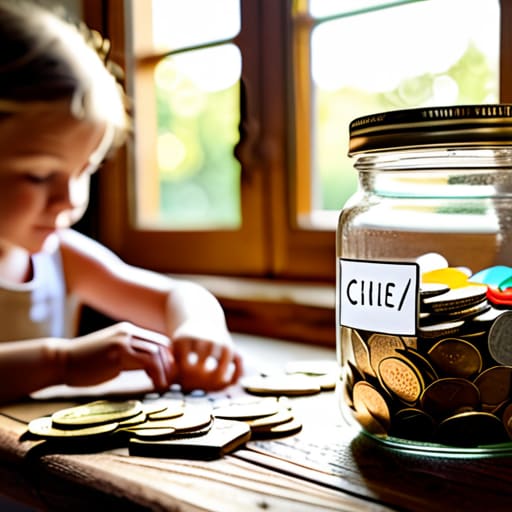
The biggest mistake I see people make is treating an allowance like a reward for good behavior. If you tie it to chores, you’re teaching them that money is a bribe, not a tool. Instead, think of it as a controlled sandbox for teaching kids about budgeting in a way that won’t break your bank account if they mess up. Give them a set amount every week—no more, no less—and let them feel the weight of their choices.
To make this actually work, I’m a big believer in the “Three Jar System.” Instead of one big pile of cash, have them divide their money into three clear containers: Spend, Save, and Give. This is one of those small, repeatable wins that makes using allowances to teach finance feel intuitive rather than like a lecture. If they blow their entire “Spend” jar on a cheap plastic toy that breaks in ten minutes, let them. That minor sting of regret is a much better teacher than any textbook, and it’s far more effective for teaching children the value of money than me lecturing them from the kitchen table.
Age Appropriate Money Lessons That Actually Stick
The trick is to match the lesson to their actual capacity for impulse control. For toddlers and preschoolers, it’s not about math; it’s about the physical reality of exchange. When you’re teaching children the value of money, let them see the transaction happen. If they want a specific snack at the store, show them the coins, hand them to the cashier, and let them feel the weight of the change coming back. It makes the concept tangible rather than abstract.
Once they hit elementary school, you can start introducing more structured age-appropriate money lessons. This is the sweet spot for teaching kids about budgeting on a micro-scale. Instead of just giving them cash for whatever they want, introduce the “Three Jar System”: Spend, Save, and Give. It’s a low-effort way to help them visualize where their resources are going. By separating their funds into these physical categories, they start to understand that money isn’t just an endless stream of “yes”—it’s a finite tool that requires intentional choices.
Small Systems for Big Lessons
- Use the “Three Jar” method. Don’t just give them a pile of cash; give them three clear jars labeled Spend, Save, and Give. It turns abstract math into a physical visual of where their resources are actually going.
- Let them make mistakes while the stakes are low. If they blow their entire monthly allowance on a cheap plastic toy that breaks in ten minutes, don’t bail them out. That’s a cheap lesson to learn now rather than a massive one when they’re twenty.
- Normalize talking about costs in real-time. When we’re at the grocery store, don’t hide the receipt. Point out the price difference between the name brand and the store brand. It’s not about being cheap; it’s about being intentional.
- Connect money to time. Since I work freelance, I’m always thinking about value. Help them understand that a new video game isn’t just $60—it’s several hours of chores or a certain amount of saved birthday money. It builds a sense of trade-offs.
- Automate the “giving” part. If they have a small amount set aside for charity or helping others, help them set a recurring “donation” date. It builds the habit of seeing money as a tool for impact, not just something to hoard.
The Long Game
At the end of the day, teaching kids about money isn’t about turning them into miniature hedge fund managers or lecturing them on compound interest until they tune you out. It’s about the systems we put in place—using small, manageable allowances to practice decision-making and breaking lessons down into age-appropriate chunks that actually make sense to them. If you can move away from the stress of constant correction and toward a model of consistent, low-effort habits, you’ve already won half the battle. We aren’t looking for perfection here; we’re just looking to build a foundation that doesn’t crumble the first time they face a real-world expense.
I grew up seeing how much weight a lack of financial literacy can add to a person’s shoulders, and I don’t want that for the next generation. My goal isn’t to give them a manual for wealth, but rather the tools for autonomy. When you teach a kid how to manage ten dollars today, you’re giving them the confidence to manage a thousand tomorrow. Focus on the small, repeatable wins and let the rest settle in over time. It’s a slow process, but it’s one of the most practical ways to ensure they can build a life that serves them, rather than one they’re constantly struggling to maintain.
Frequently Asked Questions
How do I handle it when they blow their entire allowance on something useless in one go?
Don’t swoop in and save them. It’s tempting to lecture, but the best lesson is the empty wallet. If they blow their month’s budget on a cheap plastic toy that breaks in ten minutes, let them feel that sting. That’s not being mean; it’s being realistic. Instead of a lecture, just ask: “What’s the plan for next week now that the money’s gone?” Let the natural consequence do the heavy lifting for you.
Is it better to give them physical cash they can touch, or should I start using a digital app?
Start with physical cash. I grew up seeing how quickly numbers on a screen can feel abstract and meaningless. When a kid holds a five-dollar bill, they feel the weight of that choice—if they spend it on candy now, that paper is gone. Once they grasp that concept and start managing their own small “budget,” then you can transition to an app. Digital is efficient, but tactile is how they actually learn.
How much money is actually "enough" to make these lessons feel real without breaking my own budget?
Don’t try to simulate a middle-class lifestyle if you’re living on a tight margin. The “realness” comes from the scarcity, not the amount. If you can afford $5 or $10 a week, start there. The lesson isn’t about the dollar value; it’s about the math. If they want a $20 LEGO set, they have to feel the weight of those weekly increments. Use what you have—the lesson is the system, not the sum.